
Short answer
Check the thermostat is set to Cool, replace a dirty filter, and confirm the outdoor unit is running. If the outdoor fan is still, the coil is frozen, or the breaker trips, turn the system off and call a technician: those point to a capacitor, contactor, refrigerant leak or motor failure.
Start with the simple checks
A surprising share of warm-air calls are settings and filters.
- Thermostat on Cool, set below room temperature, fan on Auto
- Fresh batteries in the thermostat
- Filter not visibly gray or bowed
- Breaker and outdoor disconnect switched on
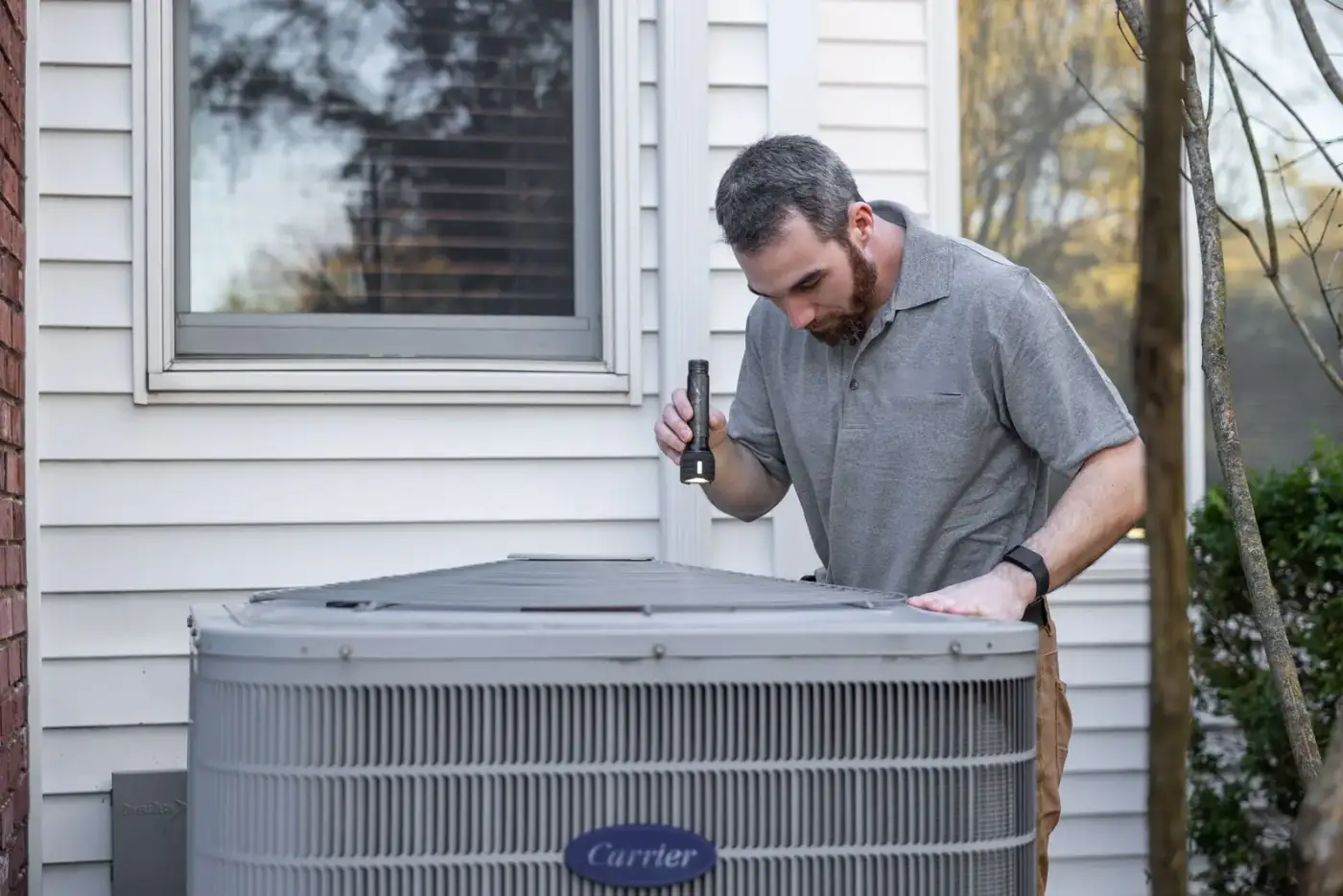
Look at the outdoor unit
With the system calling for cooling, the outdoor fan should spin and you should hear the compressor. A hum with no fan movement usually means a failed capacitor or fan motor. Don't poke the fan with a stick; the capacitor can shock you.
Look for ice
Ice on the copper line or indoor coil means low airflow or low refrigerant. Turn cooling off and run Fan only to thaw it. Running a frozen system can damage the compressor.
Check for a tripped float switch
If the thermostat is blank or the system stopped entirely, a float switch may have shut it down because the condensate drain is clogged. Look for water in the pan under the attic air handler.
When to call and what the tech does
Call if the simple checks don't fix it. The tech measures capacitor values, amp draw, refrigerant pressures and temperature split, then gives a written price before repairing.
Check the temperature split
The temperature split is the difference between the air entering the return grille and the air leaving a nearby supply vent. Measure both with a kitchen or probe thermometer after the system has run for 15 minutes. A split of roughly 15–20°F is normal; under about 10°F means the system is moving air but not removing enough heat.
Warm air from some vents but not others
If only a few rooms get warm air, the equipment may be fine and the ducts are the problem. Attic ducts that are crushed, disconnected or uninsulated can heat supply air before it reaches the room, which is common in hot-attic homes.
- Look for a disconnected flex duct at the attic register boot
- Feel for warm air leaking at the air handler plenum
- Check that dampers in the trunk lines are open
Heat pump blowing warm air in summer
A heat pump that blows warm air while set to Cool may have a stuck reversing valve or a wiring fault on the thermostat's O/B terminal. Confirm the thermostat is configured for a heat pump, then call a technician if it persists.
Questions
Can low refrigerant cause warm air?+
Yes. Low refrigerant means a leak, and the system can't absorb enough heat. It needs a leak repair, not just a top-off.
How much cooler should vent air be than room air?+
Typically 15–20°F cooler than the air going into the return. A smaller difference suggests a problem.
Why does my AC blow warm air only in the afternoon?+
On the hottest part of the day, a dirty outdoor coil, a weak capacitor or a marginal refrigerant charge can push the system past what it can handle. Cleaning the coil and testing the capacitor are the usual first steps.
Should I keep running the AC if it's blowing warm air?+
No. Turn cooling off if the outdoor unit isn't running, the coil is iced, or you hear buzzing. Running it can overheat the compressor, which is the most expensive part to replace.
Can a dirty filter make the AC blow warm air?+
Yes. A clogged filter starves the indoor coil of airflow, which can make it freeze and stop cooling. Replace the filter and let any ice melt before trying again.
Editorial note: this guide is general information for homeowners, not a diagnosis. Desertline Heating & Air is a referral service; a licensed contractor should inspect your equipment before repairs.